In commercial apparel retail, every physical touchpoint shapes how a consumer perceives your brand's market value. While wall colors, lighting fixtures, and spatial layouts form the overarching atmosphere, the structural hardware holding your merchandise does the heavy day-to-day lifting. A retail display rack is never just a utilitarian piece of furniture; it is an active extension of your brand identity and a key driver of merchandise interaction.
Selecting an unoptimized or lower-grade fixture can quietly damage a brand's reputation. Cheaply constructed racks that sag under heavy winter coats, chip from hanging metal hardware, or wobble during customer interactions signal a lack of quality. To build lasting brand equity and ensure asset durability, international fashion labels must treat fixture procurement as a strategic long-term investment. This buyer's guide breaks down the essential engineering specifications, material choices, and finishing standards needed to select a premium clothing rack for retail store environments that maximizes both store longevity and visual appeal.
Every clothing boutique communicates a specific narrative to its target market. A streetwear label requires a starkly different aesthetic language than a high-end luxury eveningwear salon. The architectural lines, weight, and material composition of your primary display rack for clothes serve as the physical baseline for this storytelling.
When designing a premium retail environment, architects rely heavily on strong geometric frameworks and refined material contrasts to catch a consumer's attention. To ensure your retail spaces stand out in modern digital landscapes, every display fixture must feel custom-built for its specific environment.
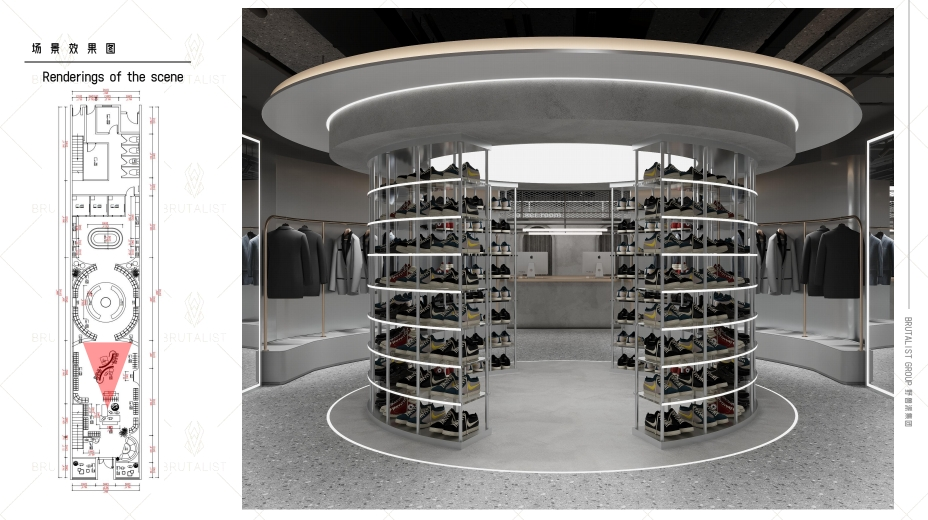
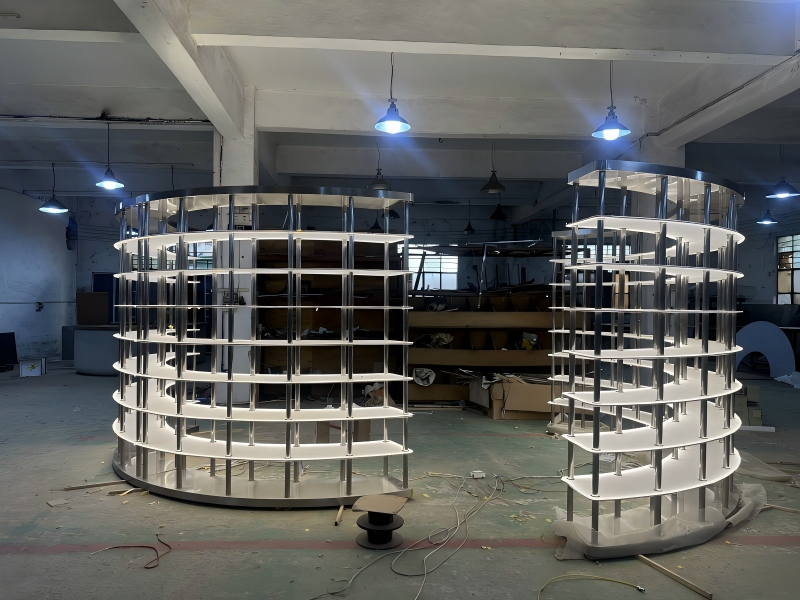
A prime example of this material innovation is our custom-engineered modular footwear and apparel display framework. By seamlessly combining architectural stainless steel with premium frosted acrylic, Brutalist engineered an advanced, ambient-lit shelving solution. To elevate the visual impact, high-efficiency LED strip lights are completely concealed using a proprietary perimeter border technique. This clever structural detailing diffuses light evenly across the entire frosted acrylic shelf, making boots and footwear collections glow beautifully as the focal point of the sales floor. Furthermore, the overall circular architecture is designed as a completely modular system, making on-site installation effortless while offering retail visual merchandisers endless layout versatility.
A common operational error in high-traffic apparel environments is underestimating the physical load limits placed on free-standing and wall-mounted display racks. A standard garment display must easily handle varied weight distributions across seasonal inventory shifts—ranging from ultra-lightweight summer silks to heavy denim, multi-layered leathers, and thick winter wool outerwear.
| Apparel Collection Category | Average Weight Load (per linear meter) | Recommended Internal Steel Wall Thickness |
|---|---|---|
| Lightweight Resort / Swimwear | 5 kg – 12 kg | 1.2 mm Structural Steel Profile |
| Standard Everyday / Streetwear | 15 kg – 30 kg | 1.5 mm Reinforced Precision Steel |
| Heavy Outwear / Denim / Leathers | 35 kg – 60+ kg | 2.0 mm+ Heavy-Duty Industrial Steel |
If a clothing rack for retail store layout uses subpar commercial metals or thin-walled tubing, the center bar will gradually bow or warp over time under continuous weight. To achieve maximum store longevity, procurement managers must evaluate the internal engineering specifications of their fixtures.
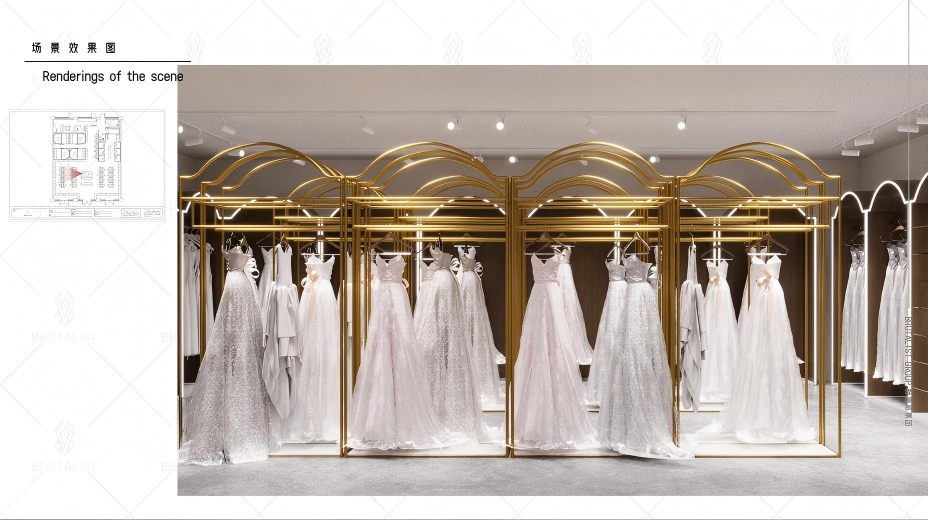
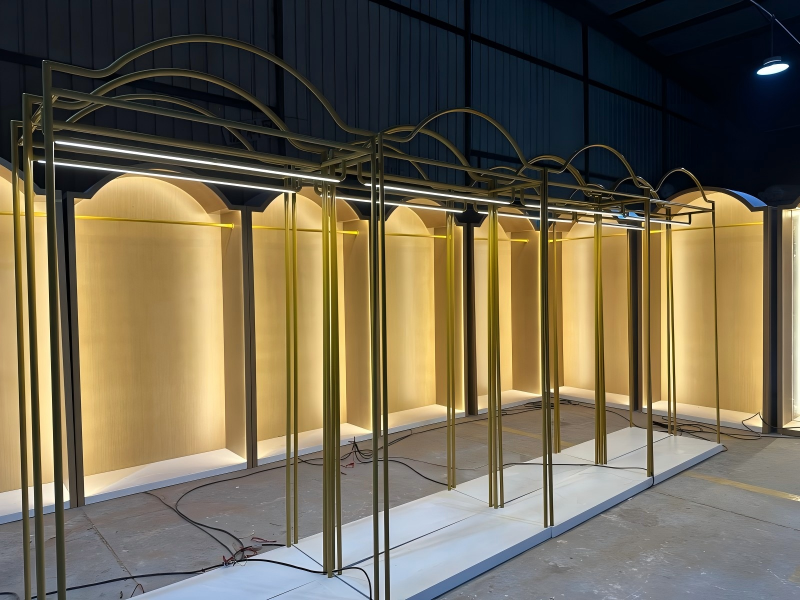
Our structural capabilities are perfectly demonstrated in a custom-built garment display project engineered for a prominent bridal boutique chain in Canada. Bridal wear is exceptionally heavy, demanding uncompromised stability. Brutalist engineered heavy-duty display fixtures weighing 20 kg per unit to completely eliminate shaking or wobbling on the retail floor. To enhance the premium luxury presentation, we integrated hidden LED strip lighting into the top rail, bathing the hanging gowns in direct architectural light. From the initial 3D custom rendering phase to the final factory output, our production team achieved a flawless, high-fidelity replication of the design concept—with the client confirming that the racks remain perfectly rigid, straight, and stunning even when holding maximum garment weight.
The longevity of a display rack for clothes is tested by daily handling. Retail hardware faces non-stop physical friction: metal clothes hangers scrape against top rails thousands of times a week, staff adjust and move mobile fixtures during seasonal floor Resets, and consumer bags or cleaning equipment hit base frames.
Standard wet spray paints or cheap plastic laminates wear out quickly under these commercial conditions, leading to unsightly scratches, peeling flakes, and exposed raw metal that can snag delicate fabrics. Protecting your investment requires utilizing advanced industrial surface finishes during production.
The premier standard for high-traffic retail hardware is industrial-grade powder coating combined with professional 2-pac painting (two-pack acrylic polyurethane coatings). Industrial powder coating bakes a resilient, impact-resistant polymer shield directly onto the steel surface, providing exceptional protection against deep scratches and chips. For customized accent pieces or high-gloss brand elements, applying 2-pac painting delivers a flawless, luxury matte or high-gloss texture that resists fingerprints, skin oils, and chemical cleaning solutions, keeping your clothing rack for retail store looking pristine for years.
An optimized retail layout maximizes sales metrics per square meter by strategically controlling customer movement. Your choice of display fixture shapes determines how shoppers move through your space.
Perimeter Display Systems: Wall-mounted tracks, floating shelves, and structural wall garment rails form the perimeter backbone of your shop floor. This approach clears up central sightlines, draws consumers deeper into the store, and uses vertical wall space to maximize stock capacity.
Free-Standing Floor Racks: Freestanding units serve as intentional visual "speed bumps." Placing low-profile, free-standing display rack for clothes configurations at natural aisle intersections slows down foot traffic and encourages shoppers to browse high-margin curated outfits.
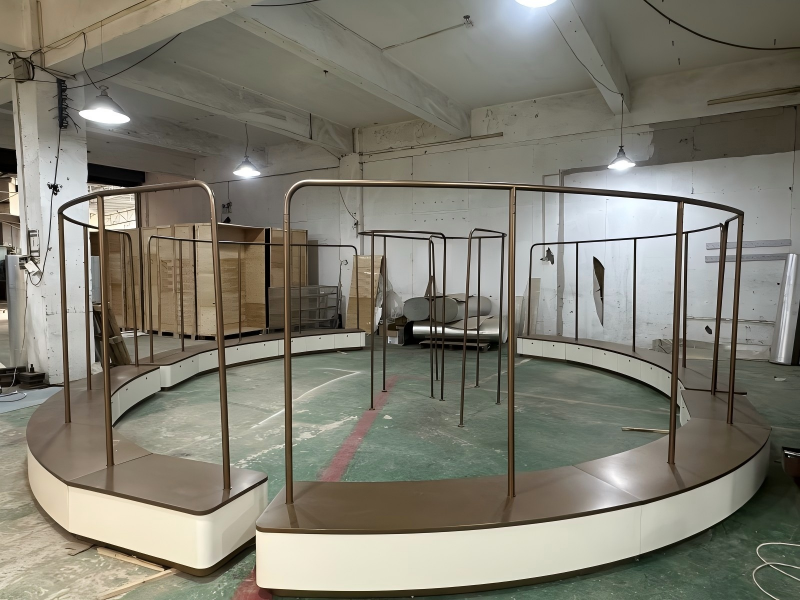
In a recent comprehensive turnkey space planning and fabrication project for a fashion retailer in the United States, Brutalist engineered an innovative free-standing curved garment fixture. Crafted from high-grade electroplated stainless steel, these curved display modules can be assembled together to form a striking, large-scale circular centerpiece. This unique layout immediately draws consumer eyes and allows shoppers to naturally navigate around the garments. Thanks to advanced modular engineering, store managers can freely reconfigure these units into various shapes, enabling multi-dimensional and multi-space merchandise presentations across changing seasons.
For international fashion franchises and growing retail brands, maintaining perfect visual and material consistency across global retail markets is critical for protecting brand equity. A flagship store in Paris, a suburban boutique in New York, and a high-end travel retail space in Singapore must share identical material finishes, structural precision, and display quality. Managing this complex deployment across continents requires a highly coordinated global manufacturing partner.
Our long-standing strategic partnership with the world-renowned apparel brand, Canada Goose, stands as a testament to our commitment to global consistency. As a trusted design-to-build manufacturing partner for many years, Brutalist proudly produces the clothing display racks, architectural hardware, and spatial merchandising assets for all of Canada Goose's retail stores across China. To streamline quality management and provide full transparency for this publicly listed global enterprise, we have constructed a permanent, full-scale showroom inside our Huizhou factory. This live environment allows corporate brand directors to audit execution quality, examine material finishes, and preview complete store layout aesthetics prior to multi-store rollouts.
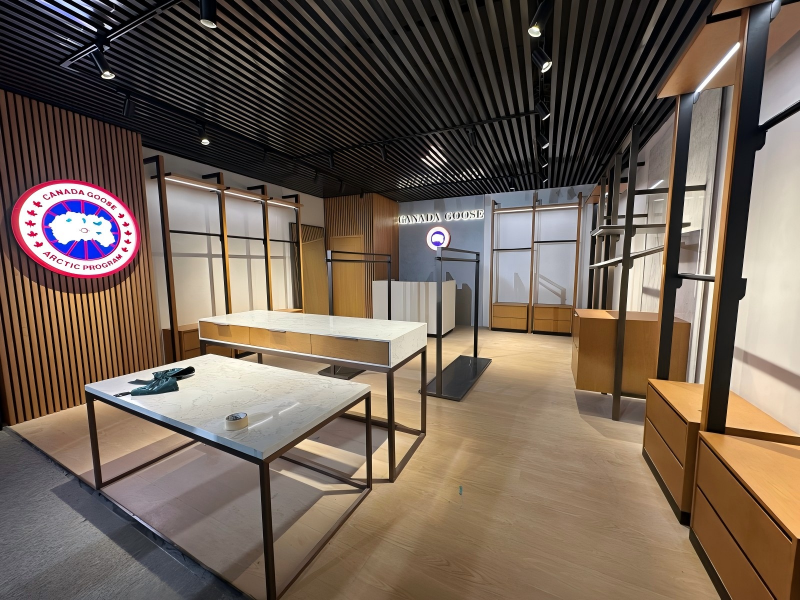
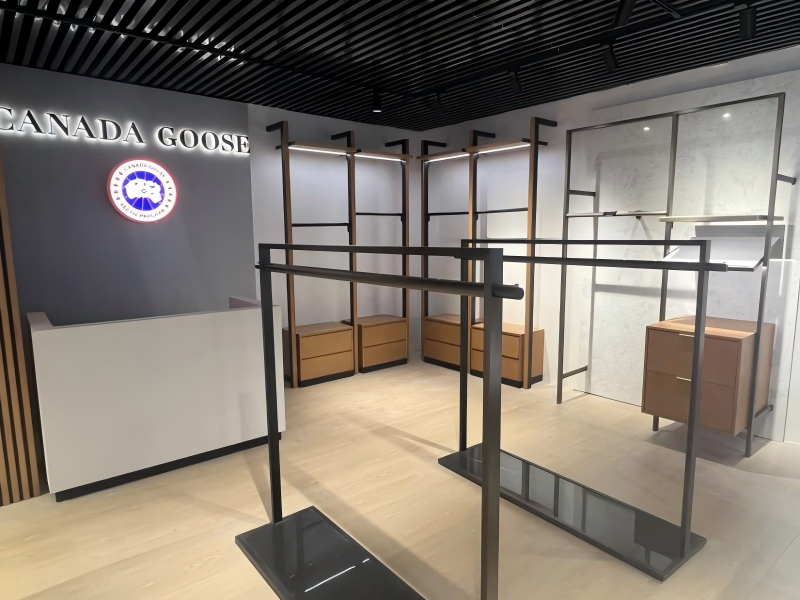
From initial floor plan mapping and 3D custom rendering to detailed technical drawings, prototype sample verification, and final production, Brutalist delivers a highly efficient global execution model. We conduct strict pre-shipment installation testing and quality checks right on our factory floor to confirm that every custom clothing rack for retail store order aligns perfectly and functions flawlessly. We then provide comprehensive technical assembly guides alongside professional global on-site installation guidance, ensuring that local general contractors can deploy your custom display rack for clothes components quickly and perfectly on opening day.
Selecting the right garment display fixtures requires balancing structural longevity, advanced material engineering, and clear brand identity. A premium commercial display rack for clothes is far more than a simple storage tool; it is a high-performance visual asset engineered to elevate your product's perceived value, streamline store operations, and withstand the constant demands of a busy retail environment. By partnering with an experienced design-to-build provider that manages the entire process—from early technical drawing layout optimization to high-precision factory fabrication and surface treatment—fashion brands can confidently deploy memorable, high-conversion retail spaces across the globe.
Want to bring your global retail vision to life with zero compromise on quality? Partner with the experts by exploring our full Brutalist Design-to-Build Solutions, or simply share your current store blueprints and concept briefs with us. Let’s create a resilient, structurally optimized environment tailored directly to your brand—reach out by Contacting Our Global Team for a precise commercial evaluation today.
Custom engineered racks are built specifically to handle commercial retail weight loads, integrate high-durability finishes, and match your brand's exact aesthetic. Cheap, off-the-shelf fixtures often sag, scratch easily, and wobble, requiring frequent replacements and harming your brand's premium image.
A 2-pac painting finish combines acrylic resins with a hardener catalyst to create an exceptionally smooth, luxury texture. This finish provides superior scratch resistance, preserves color stability under bright store lights, and easily withstands daily handling and chemical cleaning solutions compared to standard wet paints.
By mixing high-capacity wall systems with low-profile, free-standing floor displays, you create intentional visual paths. Placing unique freestanding display rack for clothes setups at aisle intersections creates natural "speed bumps" that slow down customer movement and increase engagement with key product collections.
Yes. Every single product run undergoes detailed sample verification and complete pre-shipment installation testing at our factory. We fully assemble the display systems, test load stability, and verify all surface treatments before shipping, guaranteeing a fast and seamless setup for local installation teams.