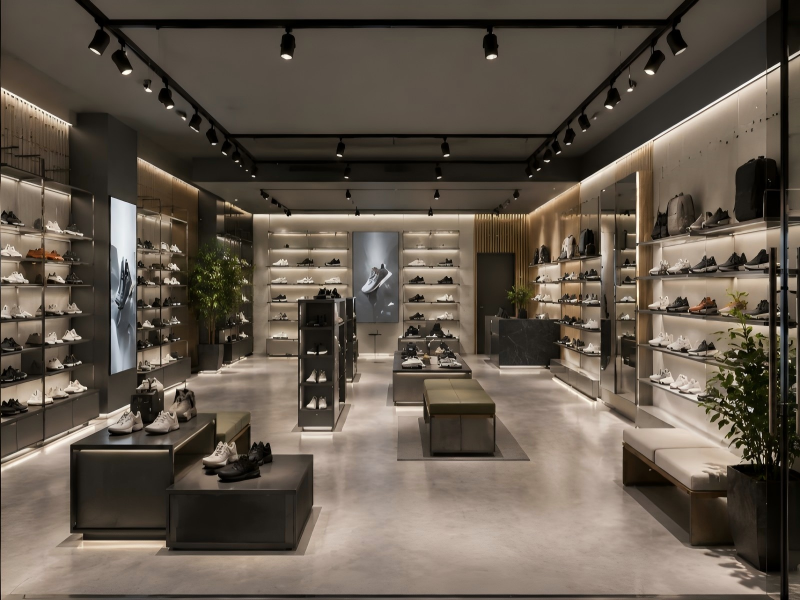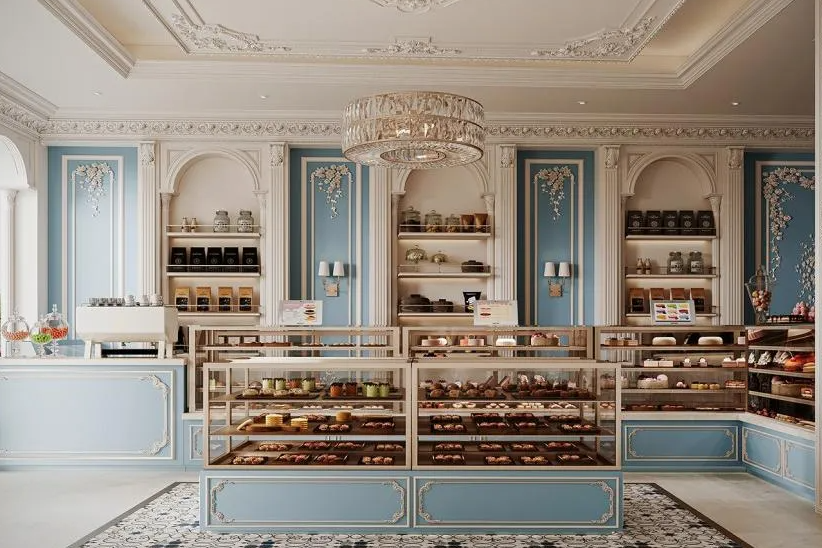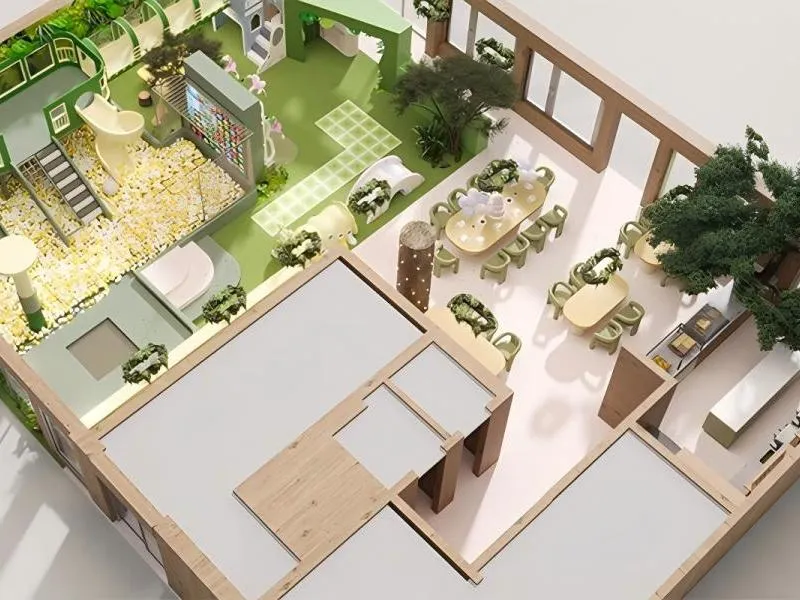
Running shoes, casual shoes, and formal shoes belong to the same footwear retail industry, but they serve different customer groups and require different approaches in product presentation, fitting experience, purchasing decisions, and store atmosphere.
Running shoe customers usually focus on product performance and actual wearing experience. Casual shoe customers are often influenced by brand style, visual merchandising, and the overall shopping environment. Formal shoe customers pay more attention to materials, craftsmanship, and the sense of quality communicated through the store.
Therefore, professional footwear shop design is not simply about arranging shoe cabinets and display areas. It requires customized solutions based on brand positioning, product characteristics, and customer behavior. Through thoughtful space planning, display methods, lighting design, and material selection, the store can better support product presentation and sales.
For footwear brands, a retail store is not only a place to display products but also an important space where customers understand and connect with the brand.
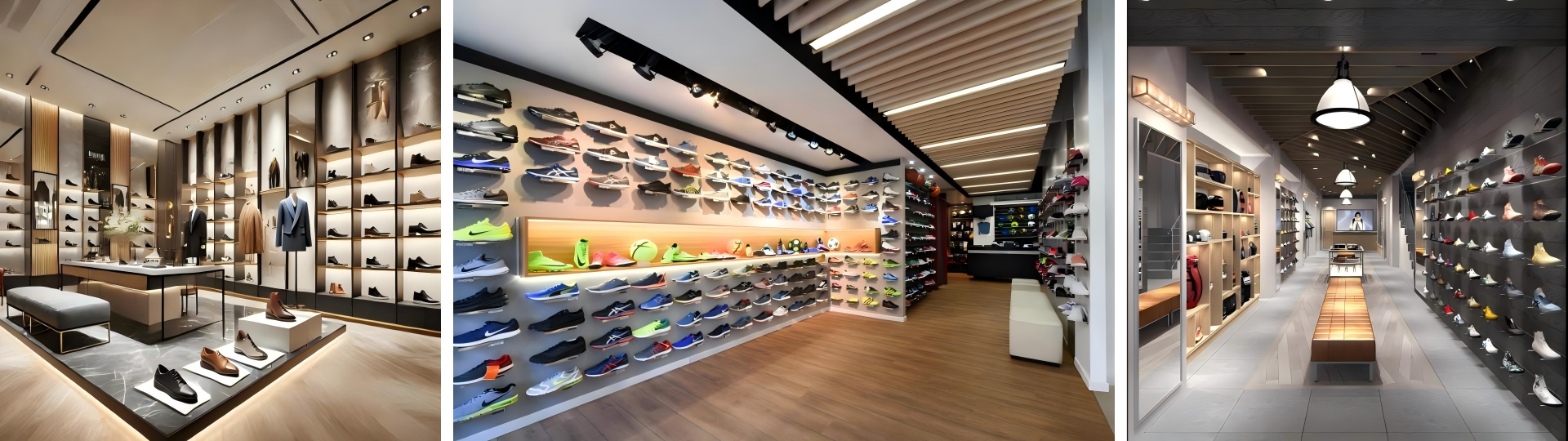
For running shoe brands, the key of store design is helping customers understand product performance and creating a complete product experience.
Running shoes often include technical features such as cushioning systems, support structures, and different sports applications. Traditional product displays may not fully communicate these advantages. Therefore, the design should include functional display systems, technology information areas, and featured product zones based on the brand positioning.
The fitting experience is also an important part of running shoe retail. The layout should consider customer movement, product testing, and comparison between different models. A well-planned circulation system allows customers to naturally move from browsing to experiencing and purchasing.
In terms of visual design, running shoe stores often combine modern materials such as metal, glass, acrylic, and LED lighting to create a dynamic and technology-driven environment while maintaining consistency with the brand identity.
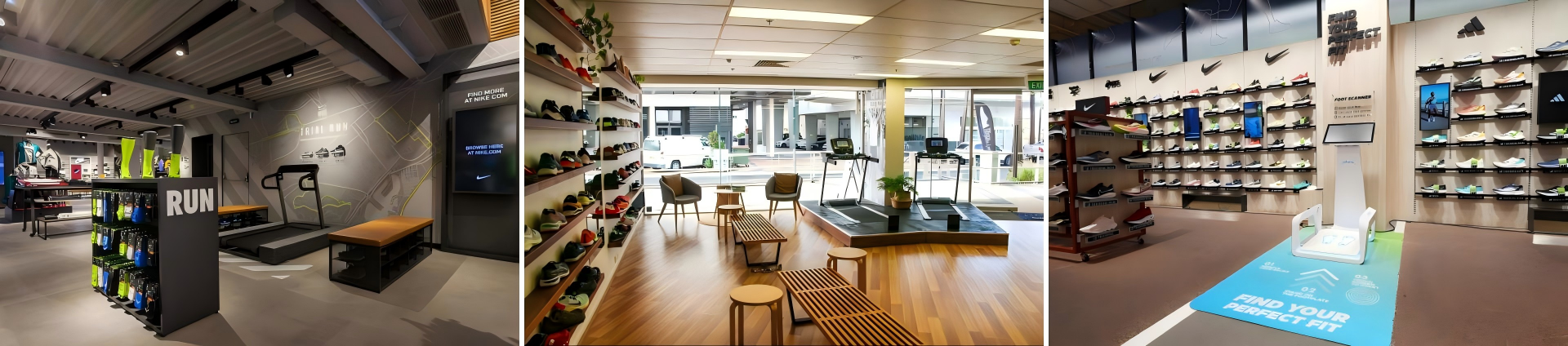
Compared with running shoes that focus on performance, casual shoe store design places more emphasis on brand culture, customer interaction, and shopping atmosphere.
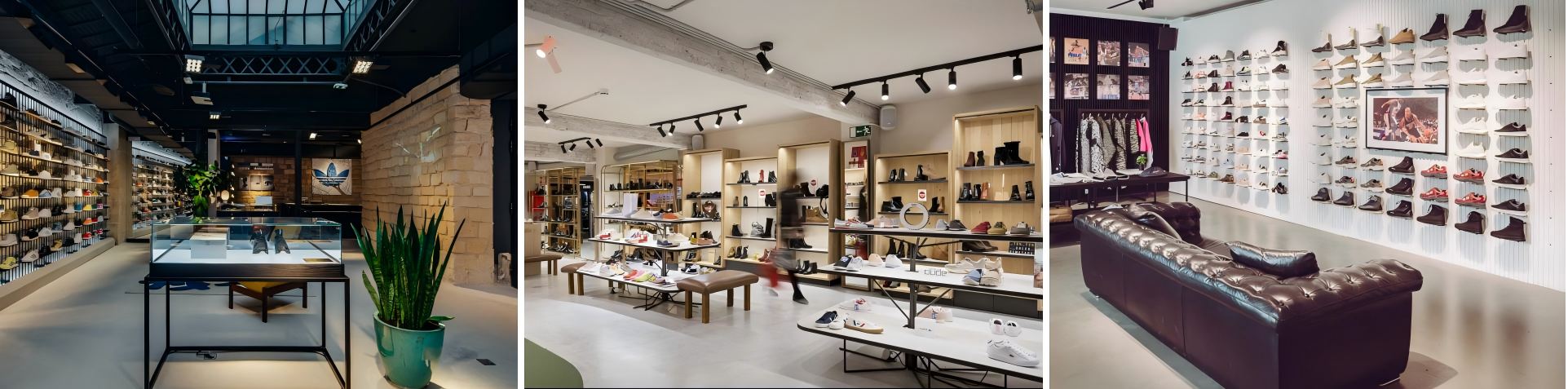
Customers purchasing casual shoes and sneakers are often looking for more than a product. They are also choosing a lifestyle and personal expression. Therefore, in sneaker store interior design, the space should help brands communicate their identity and create a connection between products and customers’ lifestyles.
During the design process, we develop display solutions according to the brand positioning, including open shoe walls, central displays, themed merchandising areas, and styling spaces. These elements allow customers to explore products more freely and understand how the products fit into their daily life.
At the same time, casual footwear brands often update their collections frequently, which requires flexible display systems. Modular furniture, adjustable display structures, and replaceable visual elements allow brands to update the store according to new launches, seasonal campaigns, and marketing activities.
For casual footwear brands, successful retail design is not only about product presentation but also about expressing brand personality through materials, lighting, and merchandising.
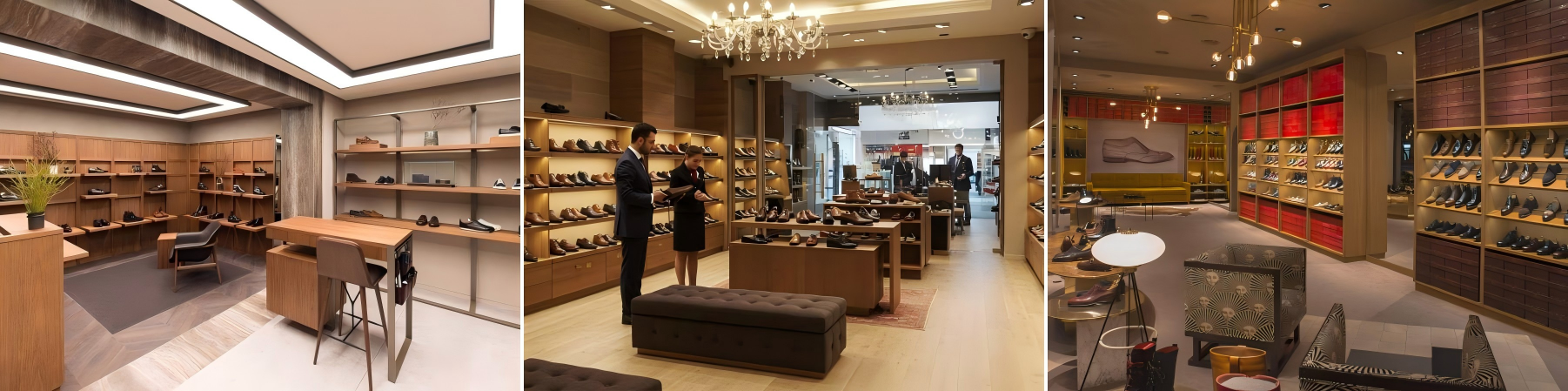
Formal shoe stores differ from running and casual footwear stores because they place greater emphasis on quality presentation, product details, and service experience.
Formal shoe customers usually pay close attention to leather quality, craftsmanship, and brand positioning. Therefore, the store design should avoid excessive product displays and instead use refined presentation methods to highlight the value of each product.
In commercial space design, we select materials according to the brand character. Wood finishes create a classic and stable atmosphere, metal details add a modern and refined feeling, and leather elements create a natural connection with the products. These materials influence not only the appearance of the store but also customers’ perception of brand quality.
Lighting design is another important element in formal footwear retail. Focused lighting can highlight leather texture, shoe shape, and craftsmanship details, making products become the visual focus of the space.
Comfortable fitting areas, seating areas, and consultation spaces are also essential components of a premium formal shoe retail environment, providing customers with a more professional shopping experience.
When a brand sells running shoes, casual shoes, and formal shoes in the same store, the biggest challenge is not simply separating products into three areas. The key is creating a natural shopping journey where different product categories can connect with each other within one unified space.
In a multi-category footwear shop design, customer flow should be considered from the moment customers enter the store. Different product zones need clear functions, but they should not feel like three independent stores. An entrance display can attract customers, while open circulation areas can connect different product categories and encourage exploration.
The relationship between different zones is also important. Transition areas can be used to connect different product experiences. For example, brand walls, themed displays, or shared presentation areas can create a visual connection between running shoes and casual shoes. Between casual and formal footwear areas, changes in materials, lighting, and display density can gradually guide customers from a relaxed shopping atmosphere to a more refined retail experience.
At the same time, all areas should follow a consistent brand language. Different sections can have their own material and lighting characteristics, but unified brand colors, logo presentation, furniture design, and detailed elements should connect the entire store and ensure that customers experience one complete brand space rather than separate areas.
A successful footwear shop design does not mean making every area look the same. Instead, it creates different experiences under one clear brand identity. Through thoughtful space planning, display systems, and design strategies, running shoes, casual shoes, and formal shoes can work together within one retail environment and support the brand’s commercial goals.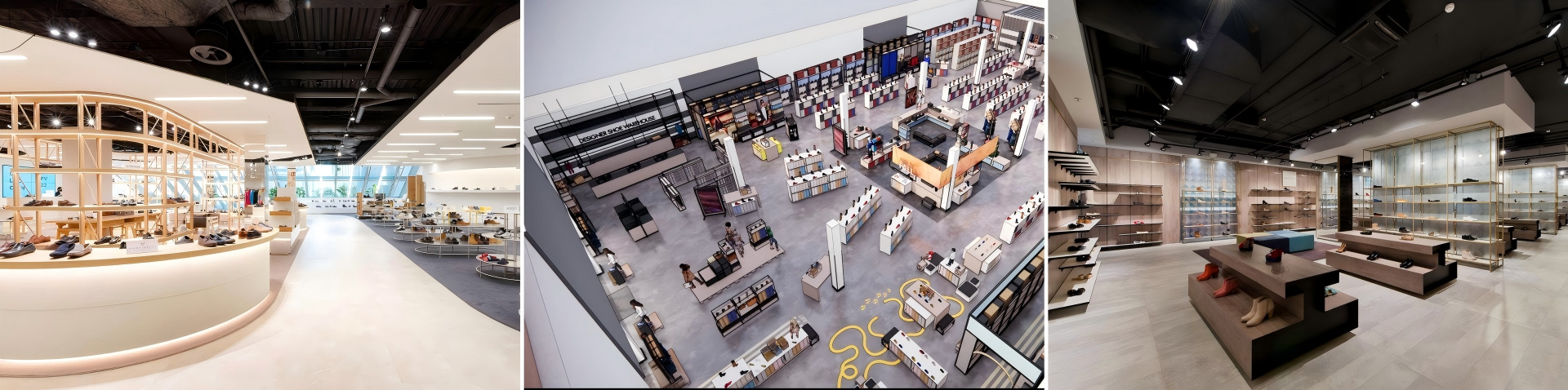
Different footwear categories have different retail requirements, and successful commercial space design requires a balance between brand positioning, product characteristics, and customer needs. Through customized space planning, display design, material selection, and professional execution, footwear brands can create retail environments that support both business operations and brand value.
As a professional commercial space design and customization company, we provide complete Brutalist Design-to-Build Solutions—from brand analysis and 3D design development to modular display systems, material application, precision manufacturing, and global installation—transforming design concepts into functional and successful retail spaces. Ready to elevate your retail footprint? Start optimizing your store layout today by Contacting Our Global Team for a tailored project evaluation.